
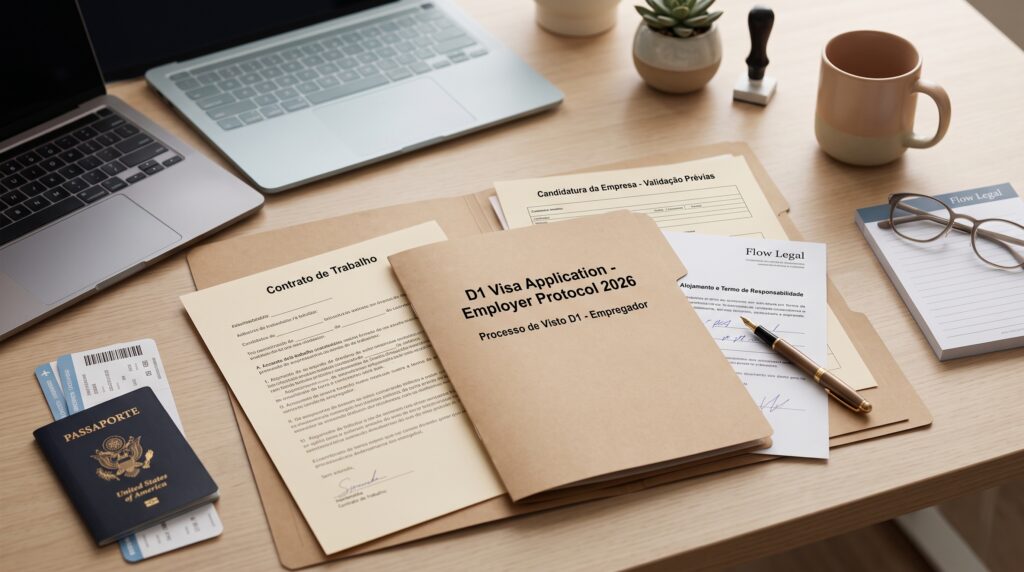
Portugal D1 Visa Changes 2026: Employers Must Now Start the Application
Portugal has announced a significant change to the procedure for D1 work visa applications.
From 2026, in few jurisdictions such as Brazil, India, the process can no longer be initiated independently by the foreign worker. The first formal step must be taken by the hiring company established in Portugal or by its duly authorised legal representative.
The company must first contact the competent Portuguese consular authority and provide information and supporting documents concerning the company, the employment relationship, the available position, the work place and the worker’s accommodation in Portugal.
Only after this preliminary stage has been completed may the foreign worker proceed with the personal submission of the visa application.
The change gives Portuguese employers a much more active role in the immigration process and means that a signed employment contract or promise of employment will no longer be sufficient for a worker to start the D1 procedure alone.
What Changes From 2026?
The main change concerns who is permitted to start the process.
Previously, the foreign worker could generally gather the necessary documents, obtain an employment contract or promise of employment and initiate the visa application directly through the applicable consular or visa application channel.
From 2026, the procedure must begin with the Portuguese employer.
The company — or its authorised legal representative — must contact the competent Portuguese consular authority and complete a preliminary validation stage before the worker can submit the visa application.
The new process can be summarised as follows:
- The Portuguese company initiates the procedure.
- The company provides the required corporate and employment information.
- The competent authority reviews the company and the proposed employment relationship.
- Once the preliminary stage is completed, the worker may proceed with the personal visa submission.
- The worker attends the designated visa application centre or consular post and submits the complete application.
The employer starts the procedure, but the foreign worker remains the formal visa applicant.
The Worker Can No Longer Start the Process Alone
One of the most important consequences of the new procedure is the end of independently initiated D1 applications.
The worker will no longer be able to begin the process solely by presenting a signed employment contract or promise of employment.
Before an appointment or submission can proceed, the hiring company must complete the required preliminary communication with the competent Portuguese authority.
Without the company’s participation, the D1 process cannot move forward.
Prior Validation of the Hiring Company
The new procedure introduces a preliminary assessment of the Portuguese employer.
Before the worker is permitted to proceed with the personal submission, the competent authority may verify whether:
- the company is legally incorporated and active;
- the company is compliant with its tax obligations;
- the company is compliant with its social security obligations;
- the proposed vacancy is genuine;
- the employment conditions comply with Portuguese law;
- the workplace has been properly identified;
- the company has the capacity to employ the worker; and
- suitable accommodation has been arranged.
This preliminary stage is intended to ensure that the visa application is based on a genuine and properly documented employment relationship.
Accommodation Becomes a Central Requirement
Another significant aspect of the new procedure is the employer’s responsibility to provide information about the worker’s accommodation in Portugal.
The company may need to demonstrate where the employee will live after arriving in the country.
Companies planning to recruit workers from abroad should address the accommodation requirement before initiating the consular procedure.
Does the Company Submit the Visa Application?
Not exactly.
It is important to distinguish between initiating the procedure and formally submitting the visa application.
The Portuguese company is responsible for starting the process and completing the preliminary employer validation.
The most accurate way to describe the new procedure is:
The employer initiates and validates the employment stage, while the worker personally submits the visa application.
Applications Must Be Submitted in Person
Under the new procedure, D1 applications must be submitted personally.
Postal submissions will no longer be accepted.
After the employer completes the preliminary stage, the worker must attend the designated visa application centre or competent Portuguese consular post.
Foreign public documents may need to be apostilled or legalised and, where necessary, translated before submission.
Why Has the D1 Procedure Changed?
The new employer-led procedure increases control over employment-based immigration before the worker formally submits the visa application.
The change also transfers greater responsibility to Portuguese companies involved in international recruitment.
Employers can no longer limit their participation to signing a contract and leaving the remaining immigration procedure entirely to the worker.
Can a Lawyer Represent the Company?
The hiring company may be assisted or represented by a duly authorised legal representative, subject to the requirements of the competent authority.
The representative must have proper authority to act on behalf of the company.
Key Points About the New D1 Procedure
2026:
- the worker can no longer independently initiate the D1 process;
- the Portuguese employer must take the first formal step;
- an authorised legal representative may act for the company;
- the employer must provide corporate and employment information;
- the company’s legal, tax and operational situation may be assessed;
- the existence of a genuine employment position must be demonstrated;
- the workplace must be identified;
- the worker’s accommodation must be documented;
- a signed employment contract alone is no longer sufficient to initiate the procedure;
- the worker must personally submit the visa application; and
- postal applications will no longer be accepted.
Final Considerations
Although the new D1 procedure is only in practice in a few jurisdictions, is seems to become a tendency to be followed by the other consulates very soon since the portuguese authorities is strengthening the visa procedures.
It represents a significant change in employment-based immigration to Portugal.
The foreign worker can no longer manage the process independently. The Portuguese employer must actively participate from the beginning and demonstrate the legitimacy of the company, the vacancy, the employment conditions, the workplace and the accommodation arrangements.
For companies, international recruitment will require greater legal and administrative preparation.
For workers, receiving a signed contract will no longer be enough to initiate the visa process. The employer must understand and fulfil its responsibilities before the personal application can proceed.
Professional assistance can help companies and foreign workers coordinate both stages, prepare the required documentation and reduce the risk of delays caused by an incomplete employer validation or visa application.
Professional assistance can also help you to define the best route, the proceedings and the accurate way to proceed, becoming more cost effective.
This article provides general information concerning the D1 procedure announced to take effect from 2026 in a few jurisdictions. The applicable instructions and submission channels should always be confirmed with the competent Portuguese authority.
This article is merely informative.
Please, check a registered professional to assist you.